Lisa’s Literal Translations #2 – Emily Dickinson #294

LiteraryTranslation

What a Literal Translation is: A word-f0r-word translation that swaps words out with literal synonyms

Why a Literal Translation: They help dissect hard-to-understand poems. Most of the time.

Emily Dickinson’s poem #294, the Original:

The Doomed – regard the Sunrise
With different Delight –
Because – when next it burns abroad
They doubt to witness it –

The Man – to die – tomorrow –
Harks for the Meadow Bird –
Because its Music stirs the Axe
That clamors for his head –

Joyful – to whom the Sunrise
Precedes Enamored – Day
Joyful – for whom the Meadow Bird
Has ought but Elegy!

*^*^*^*^*^*^*^*^*^*^*^*^*^*^*^*

Lisa’s Literal Translation:

The Condemned – look at the Emerging of the Sun
With altering Happiness –
Because – the time soonest again it fires far away
They question to see it –

The Male Person – to expire – the day after today –
Listens for the Field Small Winged And Beaked Animal –
For The Reason That its Song moves the Bladed Hammer
That calls for his uppermost appendage –

Ecstatic – to whom the Lifting of the Sun
Comes Before Love-Smacked – AM
Ecstatic – for whom the Field Small Winged And Beaked Animal
Holds nothing but Lament for the Dead!

*^*^*^*^*^*^*^*^*^*^*^*^*^*^*^*

This poem implies that even someone on death row might be looking forward to the new day (their death day). I’m guessing because death means freedom. I chose a Dickinson poem at random, because I just love her, even if her poems are a bit hard to understand sometimes.

If you have a poem you’d like to see me translate literally, just let me know!

Five Things I Loved about The Night Circus by Erin Morgenstern

The Night Circus is the story of two magicians raised from childhood into a competition with each other—though at first they do not know who they are competing against, or what the rules of the competition are. All they know is that they are supposed to be extraordinary. And eventually, they discover that their competition is to take place in the mysterious Night Circus, or Le Cirque des Rêves (or the Circus of Dreams). The circus is really their canvas, and thus it becomes something more than just a normal circus. It becomes magical. Here are some of my favorite things about this book:

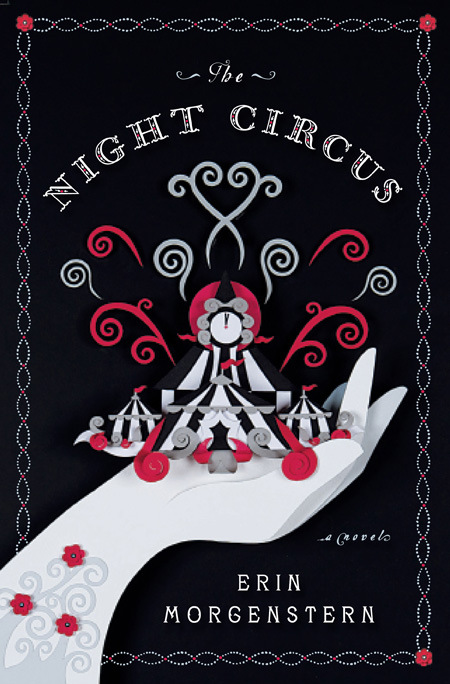
night-circus-cover-low-res1) The circus itself.

Everything in the Circus is black and white. And the tents described are stunning, to say the least. A garden made entirely of ice. A maze that climbs up, but that you can jump down from without harming yourself at any height. A true labyrinth. A wishing tree. And those are just a few. I love the imagination that went into these lovely things, and I wish I could see them.

2) Except that you almost can see them.

You know how some books get bogged down with description? There are some VERY thorough descriptions in this book… but you never feel as if they’re weighing on you as a reader, because the things they are describing are so beautiful or unique or fascinating. I have such a clear idea of what some of the circus looks like, because Morgenstern showed me exactly what she wanted me to see. I listened to this on audio, but the gorgeous details alone make me want to buy the physical book so I can leaf through it at my leisure.

3) The reader is invited into the circus, too.

I know this part throws some people off, but there are bits here and there throughout the book in second person (that’s using “YOU” instead of “He/She” or “I”). Some people are so unused to this that it really threw them out of the book and made them uncomfortable, but for me this made the book so much more. I let these second person bits take me away, and I really felt as if I was being enveloped in the magic of the circus, right along with the other patrons.

4) The perfect escapism here.

What I love really, is that this book is everything a circus is supposed to be. Mystical. Wonderful. A bit of something beyond everyday life. This book made me feel like a child who could believe in absolutely anything. And that it can be beautiful on top of everything else. Maybe I’m being repetitive here. But really, the book is So. Full. Of. Magic.

5) The End

I have to admit, I was expecting this ending to tear my heart out and stomp on it. And while I was a little surprised at how not traumatized I was by the ending, I did love it. Finishing this book was like a hot cup of cocoa… rich and satisfying.

And as a bonus, if you listen to the audiobook, it’s read by Jim Dale. Who happened to once play Phineas Taylor Barnum in the Broadway musical Barnum (one of my favorites!) (and you know, of Barnum & Bailey?) so he is really the absolutely perfect person to read this.

In truth, there wasn’t a lot about this book that I didn’t love. Well, except maybe that there was a touch of uncomfortable eeriness here and there—but really, that’s all part of the deal when there’s a circus involved. 😉

Highly, highly recommend this one.

What is the most magical book you’ve read?

Lisa’s Literal Translations #1 – Shakespeare’s Sonnet #18

LiteraryTranslation

Sonnet #18 by William Shakespeare (Literal Translation):

Should I balance your qualities with those of a 24 hour period in the hottest season?

You are prettier and milder.

Callous movements of air rattle the dear flowerettes of May,

And the season of sun’s rental agreement possesses totally too brief a calendar length.

Once in a while overly high in temperature the visionary organ of paradise gleams,

And usually is his yellow metal coloring darkened by some degree;

And each decent from decent occasionally slopes downward,

By luck, or Gaia’s altering route, unshaven;

But your forever hotness won’t diminish,

Or fail to keep hold of that nicety you are in debt of,

Or will afterlife crow you meander within his darkness,

When in unending single dimension pictures to passage of days you syretch.

As opposite of short as males can take in oxygen, or ocular lenses can perform their primary function,

As opposite of short exists such, and such presents animation to you.


*^*^*^*^*^*^*^*^*^*^*^*^*^*^*^*

The Original:

Shall I compare thee to a summer’s day?
Thou art more lovely and more temperate.
Rough winds do shake the darling buds of May,
And summer’s lease hath all too short a date.
Sometime too hot the eye of heaven shines,
And often is his gold complexion dimmed;
And every fair from fair sometime declines,
By chance, or nature’s changing course, untrimmed;
But thy eternal summer shall not fade,
Nor lose possession of that fair thou ow’st,
Nor shall death brag thou wand’rest in his shade,
When in eternal lines to Time thou grow’st.
So long as men can breathe, or eyes can see,
So long lives this, and this gives life to thee.

What a literal translation is: A literal translation is taking something and rewriting it in literal synonyms. For example rewriting “house” as “home,” or if you want to be less pretty about it, “living abode.”

The trick is you can’t use any of the same words as in the real poem, minus the’s and and’s and whatnot. Any word you can replace, you do replace.  This is something my favorite professor had us do in college with poems that were hard to understand, or when she wanted us to think about them a different way, and it was one of my favorite things to do in her classes.

Every Thursday I’m going to be doing a literal rewrite of a poem for you. They may be long or short, but I hope they’ll be fun! I’m going to start out with some more familiar poems just to get things started. And I might throw in a song here and there for fun. If you ever want to see something literally translated, just let me know in the comments!

Daughter of Smoke & Bone and Days of Blood and Starlight by Laini Taylor – A Musing

bloodandstarlightseries


These. Books.

Okay, I’m going to preface this by saying that I am not really a fan of angel/demon stories. A small part of this is because I’m religious, but mostly because… blech. Boring. I just don’t think there is much you can do with that approaching it via the conventional methods. Fallen angel. Misguided angel. Whatever.

The Daughter of Smoke & Bone books, on the other hand, is so richly imagined that I just want to wrap my mind inside it for hours at a time. Which of course is exactly what you want from a book. I devoured these books on audio. Which isn’t hard when you work graves, but that’s hardly the point. The point is: I loved them.

While this series is indeed about angels and demons, it is really about two fantastical nations that are ancient,  rich with history, and happen to have been at war with each other since time out of mind.

I can’t even really go into how the main characters fit into this without giving a lot away, but I can tell you that I am so, so impressed with this world. The descriptions are beautiful, the characterizations rich, and the monsters are, well, monstrous. What I love about it most, maybe, is that it is filled with shades of grey. There are good characters and bad characters, but they aren’t all on one side of the battle or the other. And they don’t always know what they’re fighting for.

And oh, Taylor has a knack for ripping your heart out. Which personally, is something I love in a good story. Just when you think that things are about to get better, they get so much bone-crushingly worse. On the flipside of the coin, though, just when your heart has been ripped through the shredder, something happens like a gift—a boon—something that tells you that after everything, Taylor is a merciful god, at least.

Also, the settings are superb and full of escapism/wanderlust fancy that made me want to quit my job and move to Europe. Ish.

If you haven’ read this yet, go out and get it. It is fabulous. You will not be sorry. Well, until you realize that the next installment doesn’t come out until 2014.

+:+:+:+:+:+:+:+:+:+:+:+:+:+:+

By the by, this Thursday I’ll be starting a new weekly series involving literary nerdliness. Come back and check it out!

On the Terrifying Notion of Change

summerdreams3bybleedforyou1

Sorry for the lack of updates lately. I’d say I’ve been busy (because I really, really have) but I’ve also been a little bit overwhelmed by something that I am just starting to really wrap my head around.

I recently returned home from a writer’s conference with a buzzing sense of clarity on how to fix my novel. My novel that is 80,000 words and “completed” but just not done. Not ready.

I was already going to have to rewrite it to pretty it up, but I’d been putting that off until I figured out what I needed to do to strengthen it into what I really needed it to be. Now I feel as if I have a good strong idea as to how to make this book as good as I can truly make it on my own, but And here’s the kicker: I would have to change all of it.

Okay, not all of it. My story really in its basic form is almost exactly the same. But I am working to rewrite it with more conflict, higher stakes, and stronger motivations.

And while it was a little bit terrifying, when I got home from that conference, I ignored my 80,000 word document and opened up a new, utterly blank one.

I’m not going to lie, I don’t think this will be easy. I don’t know how long it will take. But I’m thankful that I knew what I was doing well enough to know that I wasn’t doing it well in the first place. If that makes sense.

Right now I have some 1600 words in my new document. It is… nothing. So far I’m working from my head and my heart and rewriting things word for word. Soon I’ll get to patches that I can more or less transcribe, but right now it’s a whole new terrifying ballgame. I feel a bit like I’m freefalling. Which isn’t new for me on this project.

But you know what else? For the first time since I finished the first draft? I’m thrilled to be working on this project. For he first time, the freefalling is actually fun. Is another project still distracting me a little bit? Yes, I have to admit that it is. But I’m not too worried about that.

This is a big change for what Isabelle Santiago calls my “heart story,” but if it takes it closer to becoming something that will last in the hearts of others, I’m all for it.

Have you ever had to start something over completely before? Where did it take you?

Best Take-Away Thoughts from Storymakers 2013

Now that The Mr has in his wonderful tenacity fixed my laptop at least enough that it will read its battery again (this is a big win… especially considering we probably are nowhere near being able to afford a new laptop right now, what with my broken cellphone screen… ahem… yeah…) I can finally blog about some of the absolute best take-away thoughts I had from the Storymakers 2013 conference.

atomic_eyes-whatsthestory

J. Scott Savage (Farworld & Case File 13) and Tyler Whitesides (Janitors) gave a great class on the difference between an IDEA and a STORY. For example, you can have an idea of a fantastical world with a lot of different races with deep, significant histories and individual languages, and whatnot… but it’s not a story until you take a little creature called a Hobbit and give him a quest to throw a dangerous, sought-after ring into the far-off-across-lots-of-scary-lands fires that it was forged in.

STORY has to have five things: Characters, Goals, Obstacles, Consequences and some High Concept that sets it apart from other things.

sunnysky-umbrellas

High Concept was something I heard a lot over the conference, and while I’ve always thought it was important, it was pointed out that High Concept is more important now than ever before, because self-publishing is impacting national publishing’s influence. In other words, if you want it pubbed by the big 6, High Concept HAS TO BE THERE.

lyricbomb-penguins

John Brown (Servant of a Dark God) gave some fabulous advice on keeping your reader in-tune with suggestions you might never have thought of, even though they’re magnificently simple. In other words: keep things in order. If you’re describing someone or something, work from top to bottom, close to far, whatever, just stay in one direction. Don’t hop from one direction to another. If something is happening, let the reader see that, see your character’s internalization if necessary, and react. Don’t try and start with the reaction… it just gets things mixed up in the reader’s mind. Really simple things, but key to stop your reader from having those “wait, what?” moments.

collapsingnight-synchronised

Keynote speaker Anne Perry (Charlotte & Thomas Pitt novels) gave a just beautiful speech about the fact that we all have had magical experiences, and as writers it is our duty to write them down, to reach out to human experience and say yes, I know what you’re experiencing and I’ve felt that way before. That’s a much less eloquent paraphrasing, but largely the same. She ended by saying “Have courage, and do it beautifully.”

oh_god_computer-dress

And lastly, Agent Michelle Witte (The Craptastic Guide to Pseudo-Swearinghad a fabulous class on Voice that I just loved. She showed some wonderful examples from books such as I Capture the Castle and The Unfinished Angel, and made me feel like I did a decent job describing Voice in my own Blue Bicycle ExperimentMy favorite thing that Witte said was “Be quietly distinct. You don’t have to shout. You don’t have to go overboard.” Life is in the details, after all. The trick is knowing that everyone sees those details a little differently than everyone else. Witte was good enough to fangirl about books with me a little bit after the lesson, too. Which was fun. 🙂

And that was my best take-away advice from Storymakers 13! It was a fantastic weekend, and I came home with a lot to think about. Hope this gave you a little sliver of that as well!

Why I’ve been MIA

broken-screen

This is not what my laptop looks like, but at the moment it might as well… it has decided to stop reading its battery, and as I do not have a proper desk at the moment, it’s hard to situate myself in a place where I can work on my laptop and not be wobbly…. which holds dangers of the wire coming loose.

It’s a drag, to say the least, and funds being what they are, it might be this way for a little while. Which means working on paper for me for a while! It’s not a bad thing, really… just something I have to get used to for a little bit.

In the meantime, this weekend is the LDS Storymakers Conference, so I’ll be furiously taking notes and making fun connections and learning. Hopefully I’ll have some seeds of wisdom to share with you!

For now, though, I’m going to share a picture of tulips from Temple Square in Salt Lake City. Went there with The Mr last week. So pretty! I loved it.

CAM00675


Finally looks like Spring!

Poetry Month #5: Longfellow

In celebration of April Poetry month, I’m sharing favorite poems of mine all through April. Today’s poem is the first poem I fell in love with, and a magnificent story poem, “Paul Revere’s Ride.” It has some beautiful lines in it. One of my favorite is describing the dark homes in the middle of the night, “lonely and spectral and sombre and still.” Enjoy!

Paul Revere’s Ride

Listen my children and you shall hear
Of the midnight ride of Paul Revere,
On the eighteenth of April, in Seventy-five;
Hardly a man is now alive
Who remembers that famous day and year.

He said to his friend, “If the British march
By land or sea from the town to-night,
Hang a lantern aloft in the belfry arch
Of the North Church tower as a signal light,–
One if by land, and two if by sea;
And I on the opposite shore will be,
Ready to ride and spread the alarm
Through every Middlesex village and farm,
For the country folk to be up and to arm.”

Then he said “Good-night!” and with muffled oar
Silently rowed to the Charlestown shore,
Just as the moon rose over the bay,
Where swinging wide at her moorings lay
The Somerset, British man-of-war;
A phantom ship, with each mast and spar
Across the moon like a prison bar,
And a huge black hulk, that was magnified
By its own reflection in the tide.

Meanwhile, his friend through alley and street
Wanders and watches, with eager ears,
Till in the silence around him he hears
The muster of men at the barrack door,
The sound of arms, and the tramp of feet,
And the measured tread of the grenadiers,
Marching down to their boats on the shore.

Then he climbed the tower of the Old North Church,
By the wooden stairs, with stealthy tread,
To the belfry chamber overhead,
And startled the pigeons from their perch
On the sombre rafters, that round him made
Masses and moving shapes of shade,–
By the trembling ladder, steep and tall,
To the highest window in the wall,
Where he paused to listen and look down
A moment on the roofs of the town
And the moonlight flowing over all.

Beneath, in the churchyard, lay the dead,
In their night encampment on the hill,
Wrapped in silence so deep and still
That he could hear, like a sentinel’s tread,
The watchful night-wind, as it went
Creeping along from tent to tent,
And seeming to whisper, “All is well!”
A moment only he feels the spell
Of the place and the hour, and the secret dread
Of the lonely belfry and the dead;
For suddenly all his thoughts are bent
On a shadowy something far away,
Where the river widens to meet the bay,–
A line of black that bends and floats
On the rising tide like a bridge of boats.

Meanwhile, impatient to mount and ride,
Booted and spurred, with a heavy stride
On the opposite shore walked Paul Revere.
Now he patted his horse’s side,
Now he gazed at the landscape far and near,
Then, impetuous, stamped the earth,
And turned and tightened his saddle girth;
But mostly he watched with eager search
The belfry tower of the Old North Church,
As it rose above the graves on the hill,
Lonely and spectral and sombre and still.
And lo! as he looks, on the belfry’s height
A glimmer, and then a gleam of light!
He springs to the saddle, the bridle he turns,
But lingers and gazes, till full on his sight
A second lamp in the belfry burns.

A hurry of hoofs in a village street,
A shape in the moonlight, a bulk in the dark,
And beneath, from the pebbles, in passing, a spark
Struck out by a steed flying fearless and fleet;
That was all! And yet, through the gloom and the light,
The fate of a nation was riding that night;
And the spark struck out by that steed, in his flight,
Kindled the land into flame with its heat.
He has left the village and mounted the steep,
And beneath him, tranquil and broad and deep,
Is the Mystic, meeting the ocean tides;
And under the alders that skirt its edge,
Now soft on the sand, now loud on the ledge,
Is heard the tramp of his steed as he rides.

It was twelve by the village clock
When he crossed the bridge into Medford town.
He heard the crowing of the cock,
And the barking of the farmer’s dog,
And felt the damp of the river fog,
That rises after the sun goes down.

It was one by the village clock,
When he galloped into Lexington.
He saw the gilded weathercock
Swim in the moonlight as he passed,
And the meeting-house windows, black and bare,
Gaze at him with a spectral glare,
As if they already stood aghast
At the bloody work they would look upon.

It was two by the village clock,
When he came to the bridge in Concord town.
He heard the bleating of the flock,
And the twitter of birds among the trees,
And felt the breath of the morning breeze
Blowing over the meadow brown.
And one was safe and asleep in his bed
Who at the bridge would be first to fall,
Who that day would be lying dead,
Pierced by a British musket ball.

You know the rest. In the books you have read
How the British Regulars fired and fled,—
How the farmers gave them ball for ball,
>From behind each fence and farmyard wall,
Chasing the redcoats down the lane,
Then crossing the fields to emerge again
Under the trees at the turn of the road,
And only pausing to fire and load.

So through the night rode Paul Revere;
And so through the night went his cry of alarm
To every Middlesex village and farm,—
A cry of defiance, and not of fear,
A voice in the darkness, a knock at the door,
And a word that shall echo for evermore!
For, borne on the night-wind of the Past,
Through all our history, to the last,
In the hour of darkness and peril and need,
The people will waken and listen to hear
The hurrying hoof-beats of that steed,
And the midnight message of Paul Revere.
Poetry Month #4: Robert Burns

To celebrate poetry month I’m sharing a few of my favorite poems this month. This is Robert Burns, Scotland’s most famous poet, in my favorite of his poems.

To A Mouse, On Turning Her Up In Her Nest With The Plough

Wee, sleekit, cow’rin, tim’rous beastie,
O, what a panic’s in thy breastie!
Thou need na start awa sae hasty,
Wi’ bickering brattle!
I wad be laith to rin an’ chase thee,
Wi’ murd’ring pattle!

I’m truly sorry man’s dominion,
Has broken nature’s social union,
An’ justifies that ill opinion,
Which makes thee startle
At me, thy poor, earth-born companion,
An’ fellow-mortal!

I doubt na, whiles, but thou may thieve;
What then? poor beastie, thou maun live!
A daimen icker in a thrave
‘S a sma’ request;
I’ll get a blessin wi’ the lave,
An’ never miss’t!

Thy wee bit housie, too, in ruin!
It’s silly wa’s the win’s are strewin!
An’ naething, now, to big a new ane,
O’ foggage green!
An’ bleak December’s winds ensuin,
Baith snell an’ keen!

Thou saw the fields laid bare an’ waste,
An’ weary winter comin fast,
An’ cozie here, beneath the blast,
Thou thought to dwell-
Till crash! the cruel coulter past
Out thro’ thy cell.

That wee bit heap o’ leaves an’ stibble,
Has cost thee mony a weary nibble!
Now thou’s turn’d out, for a’ thy trouble,
But house or hald,
To thole the winter’s sleety dribble,
An’ cranreuch cauld!

But, Mousie, thou art no thy lane,
In proving foresight may be vain;
The best-laid schemes o’ mice an ‘men
Gang aft agley,
An’lea’e us nought but grief an’ pain,
For promis’d joy!

Still thou art blest, compar’d wi’ me
The present only toucheth thee:
But, Och! I backward cast my e’e.
On prospects drear!
An’ forward, tho’ I canna see,
I guess an’ fear!

Poetry Month Post #3: Thomas Hardy

In celebration of Poetry Month, I’m sharing some of my favorite poems all throughout the month of April. This post is a sneaky little bit of snark a la Thomas Hardy.

Ah, Are You Digging On My Grave?

“Ah, are you digging on my grave,
My loved one? — planting rue?”
— “No: yesterday he went to wed
One of the brightest wealth has bred.
‘It cannot hurt her now,’ he said,
‘That I should not be true.'”

“Then who is digging on my grave,
My nearest dearest kin?”
— “Ah, no: they sit and think, ‘What use!
What good will planting flowers produce?
No tendance of her mound can loose
Her spirit from Death’s gin.'”

“But someone digs upon my grave?
My enemy? — prodding sly?”
— “Nay: when she heard you had passed the Gate
That shuts on all flesh soon or late,
She thought you no more worth her hate,
And cares not where you lie.

“Then, who is digging on my grave?
Say — since I have not guessed!”
— “O it is I, my mistress dear,
Your little dog , who still lives near,
And much I hope my movements here
Have not disturbed your rest?”

“Ah yes! You dig upon my grave…
Why flashed it not to me
That one true heart was left behind!
What feeling do we ever find
To equal among human kind
A dog’s fidelity!”

“Mistress, I dug upon your grave
To bury a bone, in case
I should be hungry near this spot
When passing on my daily trot.
I am sorry, but I quite forgot
It was your resting place.”